
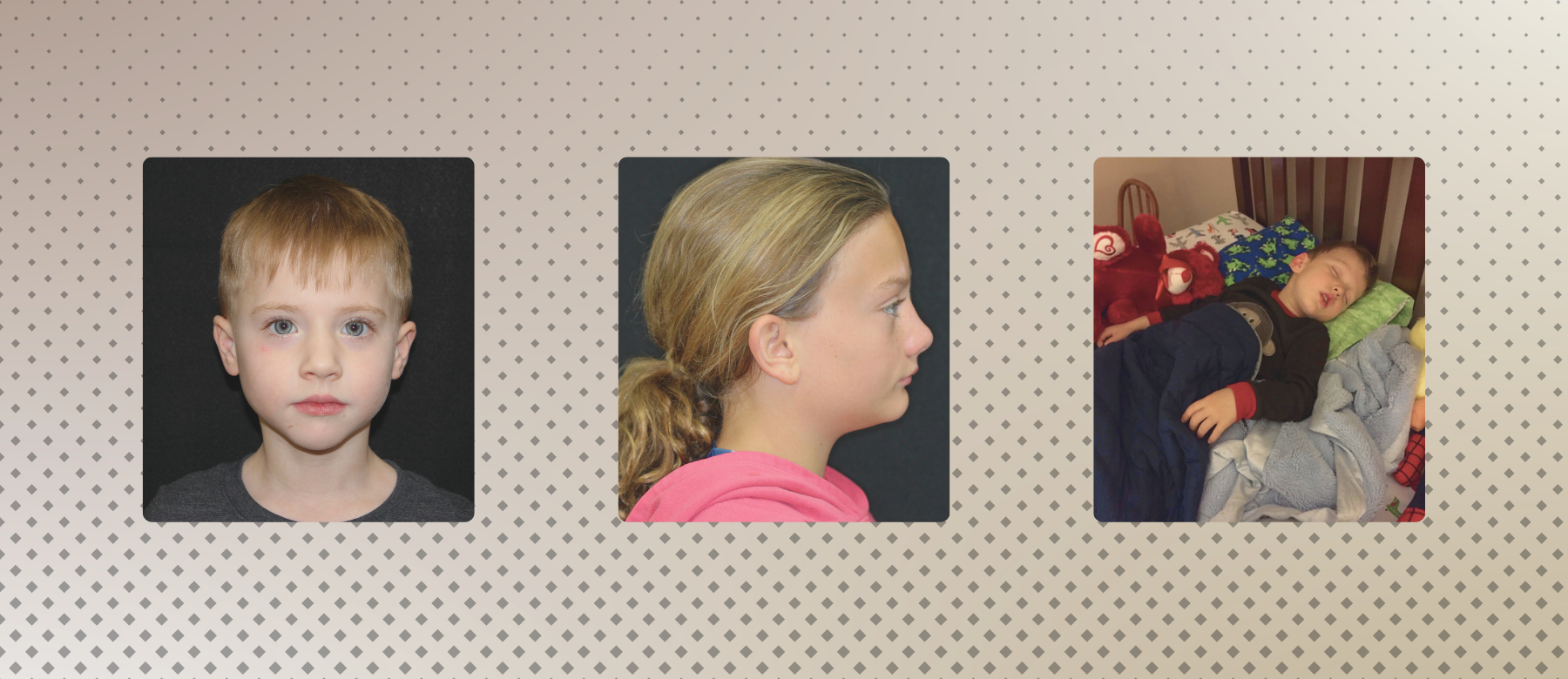
Identifying the Signs of Poor Facial Development
Looking Beyond “Wait and See”: Identifying the Root Cause of Facial and Airway Development Concerns
Many parents are told to “wait and see” when concerns about crowded teeth, mouth breathing, or restless sleep arise. At Pure Facial Development, we take a different approach. Early signs such as snoring, bedwetting, hyperactivity, narrow dental arches, or a recessed jaw often point to underlying growth patterns that affect the airway and facial structure. Through a comprehensive evaluation, Dr. Erika Peddicord assesses jaw position, tongue posture, breathing habits, facial balance, and dental development. By identifying the root cause of improper growth, we can determine whether orthotropic therapy is appropriate and begin guiding the face forward while your child is still developing.
Recognizing Mouth Breathing and Sleep Concerns in Children
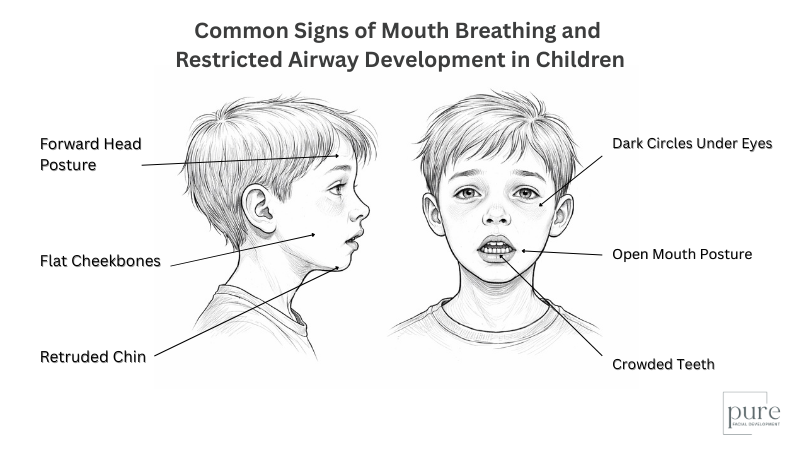
Mouth breathing is often overlooked, yet it is one of the earliest warning signs of improper facial growth and airway restriction. Children who consistently breathe through their mouths may snore, sleep with lips apart, grind their teeth, or toss and turn throughout the night. You may also notice bedwetting, dark circles under the eyes, difficulty waking, or daytime hyperactivity. These symptoms are not simply phases. They can indicate that your child is not getting restful, oxygen-rich sleep. Identifying these patterns early allows us to evaluate airway health, jaw development, and oral posture before long-term facial and dental changes become more difficult to correct. Early recognition creates an opportunity to support healthier growth during critical developmental years.
The image below highlights several visible facial characteristics commonly associated with chronic mouth breathing and airway restriction. You may notice open-lip posture at rest, elongated facial proportions, dark under-eye circles, or a narrowed upper jaw. These outward features often reflect deeper structural patterns involving jaw position, tongue posture, and airway size. By understanding what to look for, parents can become more aware of how breathing habits influence facial development. Recognizing these signs early allows for timely evaluation and development-focused care before growth patterns become more established and harder to redirect.
Key Signs of Mouth Breathing
Snoring, restless sleep, or sleeping with lips apart
Chronic mouth breathing, day or night
Bedwetting, difficulty waking, or daytime fatigue
Hyperactivity, poor focus, or behavioral changes
Dark under-eye circles or a tired facial appearance
Forward head posture
When Childhood Airway Issues Follow You Into Adulthood
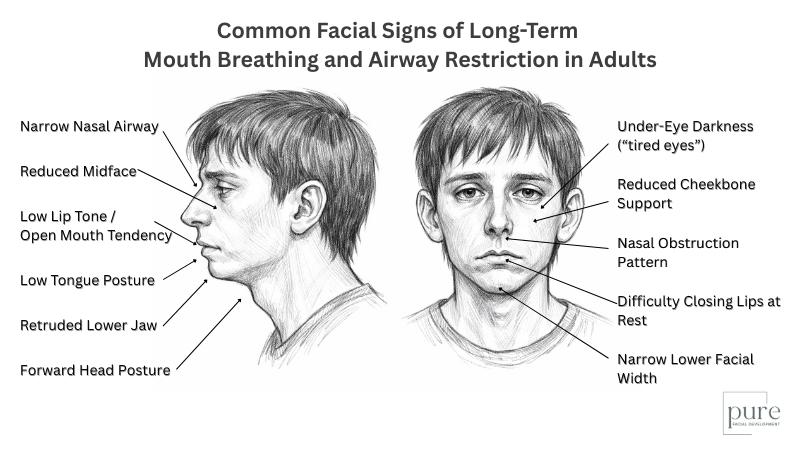
Many adults struggling with poor sleep, chronic fatigue, or difficulty breathing through the nose are experiencing the long-term effects of underdeveloped facial growth. When mouth breathing and airway restriction begin in childhood and go untreated, the face often grows downward and backward instead of forward. This can result in a narrow nasal airway, reduced cheekbone support, a retruded lower jaw, and difficulty keeping the lips closed at rest. Over time, these structural patterns may contribute to sleep-disordered breathing, jaw tension, and ongoing exhaustion. Understanding how growth patterns shape adult health is the first step toward recognizing the root cause of persistent symptoms.
Healthy Airways Support Balanced Facial Development
At Pure Facial Development in Ankeny, Dr. Erika Peddicord teaches families a simple truth: facial growth is guided by function. Nasal breathing with proper tongue posture supports outward jaw development, balanced facial proportions, and healthy airway size. When a child breathes well and sleeps deeply, the jaws are more likely to grow forward, creating space for teeth and stability for the surrounding muscles. In contrast, chronic mouth breathing and disrupted sleep may contribute to narrower jaws, a retruded chin position, and altered head posture. Early awareness creates opportunity and allows us to guide development in a healthier direction.
When healthy airway function supports growth from an early age, the long-term results are often visible in adulthood. A balanced face reflects more than appearance. It signals proper jaw position, upright head posture, relaxed lip seal, and defined cheekbone support. Bright, rested eyes and lips comfortably closed at rest are signs of adequate nasal breathing and stable development. The image shown here highlights these characteristics of healthy facial growth. By identifying airway concerns during childhood, Dr. Peddicord and the team at Pure Facial Development help families support balanced development and reduce the risk of future concerns.


Why Families in Iowa Trust Dr. Erika Peddicord
Dr. Erika Peddicord is one of the few dentists in Iowa with advanced training in orthotropics and airway-focused facial development. At Pure Facial Development in Ankeny, she is known for her ability to recognize the subtle signs of disrupted breathing and imbalanced growth, including mouth breathing, narrow arches, retruded jaw position, forward head posture, and restless sleep patterns.
What makes Pure Facial Development different:
Comprehensive evaluations that assess airway health, jaw position, and oral posture
Clinical treatment plans designed to guide forward facial growth
Custom orthotropic appliances paired with habit and breathing correction
A philosophy centered on balanced development rather than extractions
Dr. Peddicord partners closely with families to ensure consistency and long-term success. Because growth is time-sensitive, early identification and committed participation are essential to supporting healthy, balanced facial development.
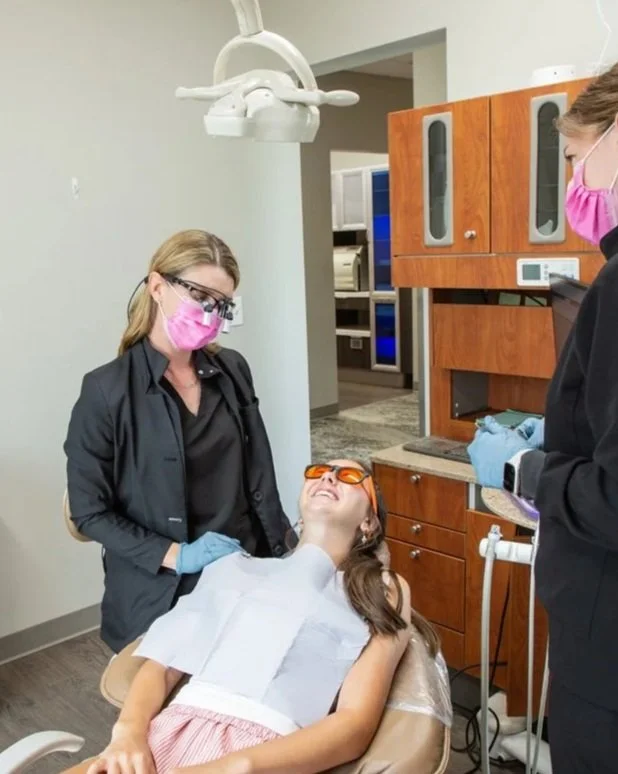
Schedule Your Child’s Consultation Today
If your child is showing signs of poor jaw development or sleep-disordered breathing, the best time to act is now. Early intervention can prevent lifelong problems and give your child the foundation for a healthier future.
Give your child more than a smile. Give them the gift of healthy growth and a lifetime of confidence, health, and natural beauty.
Ready to Learn More?
Help your child breathe, grow, and thrive using a natural approach to facial development.
Refresh your own confidence with injectable care grounded in expertise and subtlety.